Demographic Patterns Reshaping Accumulator Multipliers Alongside Live Casino Rotations During Major League Transitions
Paul Schmitz · Aug 11, 2026
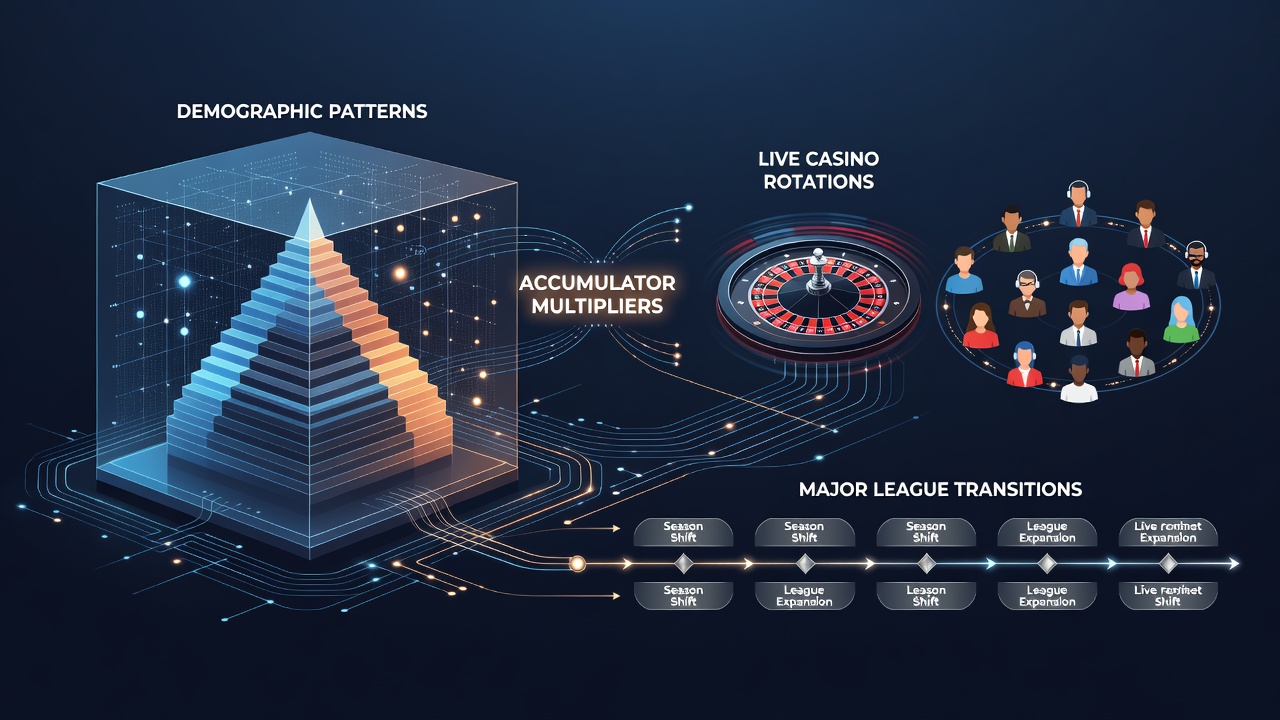
Demographic Patterns Reshaping Accumulator Multipliers Alongside Live Casino Rotations During Major League Transitions
Demographic data collected across major betting platforms shows distinct age groups and regional populations driving changes in how accumulator multipliers adjust when professional leagues move between seasons, and these same patterns coincide with rotations in live casino offerings that operators implement to maintain activity levels. Research from the Nevada Gaming Control Board indicates that bettors aged 25 to 34 increasingly favor accumulators built around emerging sports such as soccer and basketball, which leads platforms to recalibrate multiplier structures during the August window when European leagues ramp up pre-season fixtures while North American leagues enter their off-season planning phases.
Shifts in Accumulator Structures Tied to Population Data
Studies tracking user behavior reveal that younger demographics push for higher-risk accumulators with elevated multipliers when football calendars overlap with basketball pre-seasons, whereas older cohorts tend toward lower-multiplier selections that incorporate more conservative selections during the same transition periods. Operators respond by layering demographic filters into their systems so that accumulator offers refresh automatically based on user profiles, and this adjustment process accelerates in August 2026 as leagues finalize roster changes and schedule releases that influence betting volumes. Data shows these modifications help sustain engagement across different age brackets without requiring manual intervention from platform teams.
Live Casino Adjustments During Seasonal Handovers
Live casino rotations follow similar demographic cues because operators observe that certain player segments migrate toward table games when major athletic events pause or shift focus. In regions where regulatory frameworks permit rapid content updates, platforms introduce new dealer rotations and game variants timed to coincide with league transitions, and these changes often include themed promotions that align with demographic preferences identified through prior season analytics. Figures from industry reports compiled by the Alcohol and Gaming Commission of Ontario demonstrate that live dealer blackjack and roulette variants see increased participation from mid-age groups during summer-to-fall transitions, prompting operators to rotate camera angles, table limits, and bonus triggers accordingly.
Platform algorithms incorporate these patterns by monitoring real-time sign-up cohorts and adjusting live casino lineups so that content remains relevant as accumulator-focused users temporarily pivot during quiet athletic periods. This synchronization allows operators to maintain consistent revenue streams even when traditional sports calendars create natural lulls, and the process relies on anonymized demographic datasets rather than individual tracking to stay within compliance boundaries across multiple jurisdictions.

Regional Variations in Demographic Influence
European markets exhibit different demographic drivers compared with North American and Australian platforms because population densities and regulatory environments shape how quickly operators can implement multiplier or rotation changes. In markets with higher proportions of mobile-first users, accumulators tied to tennis and emerging e-sports see multiplier boosts during August transitions when football schedules stabilize but tennis circuits move between hard-court and indoor seasons. Australian regulatory summaries highlight that operators in that region prioritize live casino poker rotations for demographics that show consistent year-round engagement, and these adjustments often occur alongside accumulator recalibrations to prevent activity drops during league handovers.
Cross-border data sharing among operators reveals that urban versus rural population splits further refine these strategies, with urban users driving faster adoption of combined accumulator and live casino packages during transition months. The result appears in updated multiplier tables that automatically scale based on aggregated demographic signals collected from prior seasons, allowing platforms to forecast demand spikes without relying on generalized assumptions.
Integration of Data Sources in Platform Design
Operators integrate census-style demographic information with betting telemetry to time accumulator multiplier refreshes and live casino content rotations, and this approach has become standard as leagues publish more granular scheduling data ahead of each season. In August 2026, several major platforms are expected to deploy updated systems that reference both athletic calendars and demographic trend reports so that offers activate precisely when user cohorts shift attention. These systems draw from anonymized datasets maintained by gaming authorities and academic research groups, which reduces reliance on any single regulatory source while maintaining compliance across different territories.
Conclusion
Demographic patterns continue to guide how accumulator multipliers evolve alongside live casino rotations as leagues transition between seasons, and the mechanisms rely on aggregated data from multiple regulatory and research bodies to execute these adjustments accurately. Platforms that align these elements maintain steady participation levels across varied population segments, particularly during the critical August period when athletic schedules create natural inflection points. The process remains grounded in observable trends rather than speculation, with operators refining their approaches each cycle based on updated figures from established sources.